Perception, Learning, and Navigation


This workshop will discuss core challenges and new solutions in perception, learning and navigation for autonomous robots operating over long terms in the wild, complex and unstructured environments. With robotics applications in the wild broadening from environmental monitoring and agriculture to autonomous driving and disaster relief, the requirement for long-term robust, adaptive, and intelligent systems becomes essential. This workshop will bring together researchers and practitioners to share new technologies in sensor processing, scene understanding, mapping, localization, and machine learning to address the unique demands of long-term operations in the wild, including varying terrain, adverse weather, dynamic lighting conditions, and seasonal changes. Our goal is to foster collaboration and move toward new frontiers in robust multimodal perception, self-supervised learning, online / continual / lifelong learning, simulation-to-reality transfer, and explainable AI to enable safe, reliable and long-term autonomous robots in the wild. This workshop will feature presentations, papers, and interactive discussion by leading experts, highlighting recent developments and future research directions for enhanced long-term performance of robotic systems in the wild.
Venue
VIECON (formerly Messe Wien), Vienna, Austria.
Call for Papers
The workshop will cover a range of topics, including but not limited to:
- Long-term autonomy, persistent mapping, and online/continual/lifelong learning in ever-changing environments.
- Robust perception in harsh and dynamic conditions in the wild.
- Sensor fusion for robust long-term state estimation and scene understanding.
- Self-supervised/unsupervised/weakly-supervised learning in LoWi.
- Terrain classification and traversability analysis in LoWi.
- Sim-to-real transfer and domain adaptation in LoWi.
- Foundational models and their applications in LoWi.
- Safety, long-term reliability, uncertainty quantification, and interpretability in LoWi.
- Novel sensors, long-term or multi-season datasets, and benchmarks in LoWi.
- Reinforcement learning for navigation and interaction in dynamic, unpredictable scenarios.
- Data generation, augmentation, and active learning for the wild.
- Applications with a clear focus on long-term perception, learning, and navigation challenges.
Submission Guidelines
- We invite submissions of full papers of 4 to 8 pages, including references, formatted using the standard IEEE RAS conference template.
- Submissions must present new, high-quality research on the workshop’s themes.
- Submitted papers must not be under review or have been published in another archival venue.
- A double-blind peer-review process will be implemented. Papers will be evaluated based on their novelty, technical soundness, clarity, and relevance to the workshop.
- Accepted papers will be hosted on the workshop website but will not appear in the official IEEE Xplore proceedings, allowing for future submission to journals or major conferences.
- All accepted papers will be invited for either a spotlight oral or a poster presentation at the workshop.
- A selected number of high-quality papers will be invited to submit an extended version of their work to a special issue in a major journal.
- Papers should be submitted through the CMT portal: https://cmt3.research.microsoft.com/LoWi2026
Awards and Travel Grants
Thanks to the generous support of our sponsors, we are pleased to announce the following awards and opportunities:
- We will present a Best Student Presentation Award and a Best Presentation Award to recognize outstanding contributions to the workshop. Winners will receive a certificate and a cash prize. The selection will be based on the quality of the paper and the presentation delivered during the workshop.
- We are committed to fostering diversity and inclusion within the robotics community. A limited number of Travel Grants are available to support student authors, with priority given to applicants from underrepresented regions or groups.
- Eligibility: Student authors of accepted papers.
- Application: Details on how to apply will be sent to authors upon paper acceptance.
Important Dates
- Paper submission deadline: March 20, 2026, 11:59 p.m. (Anywhere on Earth)
- Paper notification of acceptance: April 22, 2026
- Workshop date: June 1, 2026
Schedule
| Time | Speaker | Topic / Title |
|---|---|---|
| 08:50 - 09:00 | Organizers | Welcome and Workshop Overview |
| 09:00 - 09:30 | Speaker 1 | Invited Talk #1 + Q&A |
| 09:30 - 10:00 | Speaker 2 | Invited Talk #2 + Q&A |
| 10:00 - 10:20 | 5 papers | Lightning Talks (3 min/pers) |
| 10:20 - 11:00 | - | Coffee Break & Poster Session Setup |
| 11:00 - 11:30 | Speaker 3 | Invited Talk #3 + Q&A |
| 11:30 - 12:00 | Speaker 4 | Invited Talk #4 + Q&A |
| 12:00 - 14:00 | - | Lunch Break & Continued Poster Session |
| 14:00 - 14:30 | Speaker 5 | Invited Talk #5 + Q&A |
| 14:30 - 15:00 | Speaker 6 | Invited Talk #6 + Q&A |
| 15:00 - 15:20 | 5 papers | Lightning Talks (3 min/pers) |
| 15:20 - 16:00 | - | Coffee Break & Continued Poster Session |
| 16:00 - 16:30 | Speaker 7 | Invited Talk #7 + Q&A |
| 16:30 - 17:00 | All speakers | Interactive Panel Discussion |
| 17:00 - 17:30 | Organizers | Best Presentation Awards and Closing Remarks |
Speakers
Title: Multi-robot Mapping in Maritime Environments

Teresa Vidal Calleja
University of Technology Sydney, Australia
Title: Tough Physical AI for Task Automation in Harsh Environments

Kazunori Ohno
Tohoku University, Japan
Title: Learning Robust and Generalizable Features for Long-term Localization

Xieyuanli Chen
National University of Defense Technology, China
Title: Seven Years in the Wild: Lessons from Agricultural Robots at Scale

Jaime Pulido Fentanes
Saga Robotics, Norway
Title: TBD

Timothy D Barfoot
University of Toronto, Canada
Title: Learning Robust Robot Perception in Unknown Environments
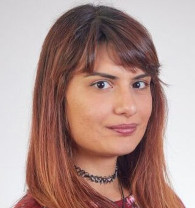
Marija Popović
Delft University of Technology, Netherlands
Title: Long-Term LiDAR Localization in the Wild: From Foundation Models to Ultra-Lightweight Features

Ayoung Kim
Seoul National University, South Korea
Organizers

Zhi Yan
ENSTA - Institut Polytechnique de Paris, France

François Goulette
ENSTA - Institut Polytechnique de Paris, France

Alexandre Chapoutot
ENSTA - Institut Polytechnique de Paris, France

David Filliat
AMIAD, France
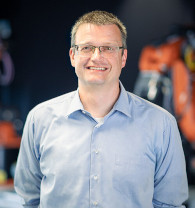
Andreas Nüchter
University of Würzburg, Germany
Hi! PARIS International Visiting Chair, France

Tao Yang
Northwestern Polytechnical University, China

Martyna Poreba
Université Paris-Saclay, CEA, List, France
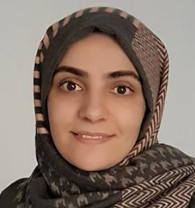
Fatemeh Rekabi Bana
Durham University, UK
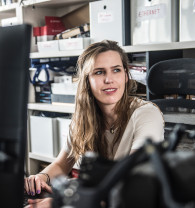
Jindriska Deckerova
Czech Technical University in Prague, Czech Republic

Tomas Krajnik
Czech Technical University in Prague, Czech Republic
Sponsors


Contact
If you have any questions, please contact us at lowiworkshop@gmail.com.


The Microsoft CMT service was used for managing the peer-reviewing process for this conference. This service was provided for free by Microsoft and they bore all expenses, including costs for Azure cloud services as well as for software development and support.